







Product Details
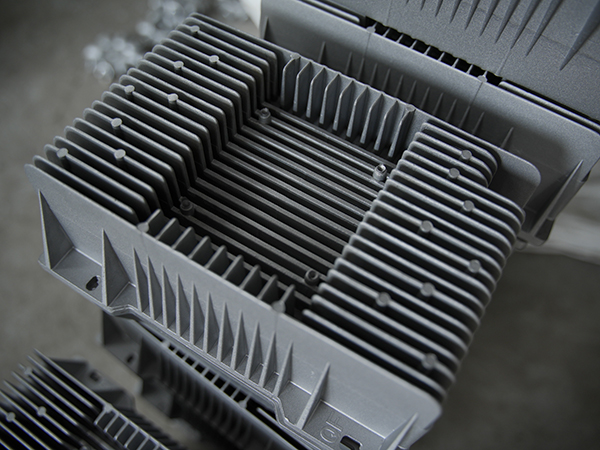
Aluminum Die Casting Parts
Aluminum Die Casting Parts
Product Overview
Aluminum Die Casting Parts are aluminum alloy components produced by injecting molten aluminum into precision molds under high pressure. This manufacturing process enables the production of complex-shaped parts with high dimensional accuracy, smooth surface quality, and consistent production performance.
Aluminum die casting is widely used for high-volume production because it provides excellent repeatability, efficient manufacturing speed, and the ability to create lightweight components with integrated structures. Aluminum alloys used in die casting offer advantages such as low weight, corrosion resistance, good thermal conductivity, and high strength-to-weight ratio.
Aluminum die casting parts are commonly applied in automotive components, industrial equipment, electrical housings, machinery parts, consumer equipment, and engineering products requiring precision aluminum components.
Product Features
High Precision Manufacturing
Aluminum Die Casting Parts are produced using precision molds and high-pressure injection technology, achieving accurate dimensions, stable tolerances, and consistent product quality.
Lightweight Aluminum Alloy Structure
Aluminum die casting components provide excellent lightweight performance while maintaining mechanical strength, helping reduce overall product weight and improve efficiency.
Complex Shape Capability
The die casting process allows the production of thin-wall structures, detailed designs, and integrated components that reduce the need for additional assembly.
Excellent Surface Quality
Die casting aluminum parts typically feature smooth surfaces and good appearance quality, reducing the need for extensive post-processing.
High Production Efficiency
The die casting process supports large-scale production with high repeatability, making it suitable for mass manufacturing applications.
Manufacturing Process
Mold Design and Development
Customized die casting molds are designed according to product drawings, 3D models, and technical requirements. Mold design plays an important role in achieving product accuracy and casting quality.
Aluminum Alloy Melting
Selected aluminum alloy materials are melted and prepared according to required mechanical properties and application conditions.
High-Pressure Die Casting
Molten aluminum alloy is injected into the mold cavity under high pressure and rapidly solidifies to form the required component shape.
Trimming and Finishing
After casting, excess material is removed. Additional processes such as CNC machining, drilling, tapping, polishing, anodizing, coating, and surface treatment can be applied.
Quality Inspection
Finished aluminum die casting parts are inspected for dimensions, surface quality, material properties, and functional requirements.
Applications
Automotive Industry
Aluminum die casting parts are widely used for engine housings, transmission components, brackets, structural parts, and lightweight automotive components.
Industrial Equipment
These components are used in machinery housings, equipment frames, motor parts, and industrial systems requiring precision aluminum structures.
Electrical and Electronic Products
Aluminum die casting parts are commonly used for electrical enclosures, heat sink components, protective housings, and electronic equipment structures.
Mechanical Components
The process is suitable for producing precision brackets, covers, supports, and customized mechanical parts.
Consumer and Engineering Products
Aluminum die casting parts are applied in various products requiring lightweight, durable, and accurate aluminum components.
Product Advantages
High dimensional accuracy
Excellent repeatability for mass production
Lightweight aluminum alloy construction
Complex shape manufacturing capability
Good surface finish quality
High production efficiency
Supports CNC machining and finishing
Suitable for customized aluminum components
Technical Characteristics
Aluminum Die Casting Parts can be customized according to:
Aluminum alloy type
Component structure and dimensions
Mold design requirements
Dimensional tolerance
Surface treatment options
Machining specifications
Production volume requirements
Common aluminum die casting alloys include materials selected for strength, corrosion resistance, thermal performance, and casting suitability.
The manufacturing process focuses on precision control, structural reliability, surface quality, and consistent production performance.
Summary
Aluminum Die Casting Parts provide an efficient solution for manufacturing lightweight, precise, and complex aluminum alloy components. With advanced high-pressure casting technology, excellent dimensional accuracy, and flexible finishing options, aluminum die casting parts are widely used in automotive, industrial equipment, electrical, machinery, and engineering applications.
 Recommended News
-
Copper Castings vs Aluminum Castings: How to Choose Suitable Casting Materials?
2026-07-21 02:18:07
-
What Are the Inherent Limitations of Copper Castings in Industrial Applications?
2026-07-21 02:17:39
-
Are Copper Castings Recyclable and What Is the Scrap Recycling Process?
2026-07-21 02:17:01
-
What Surface Treatment Processes Can Be Used on Copper Castings?
2026-07-21 02:16:36
-
Which Industries Apply Copper Castings and What Are Typical Parts?
2026-07-21 02:16:06
Contact Us
—— Hotline:+86 18920038906
—— Email:ruifeng8906@gmail.com
—— Whatsapp:+8618920038906
—— Address:Liusi, Haocun Town, Botou City, Hebei Province, P.R.China